The SpaceX IPO, or: How to Lose $5 Billion and Become a Trillionaire
A company losing $5 billion a year. A founder worth a trillion dollars. And a state that picks up the tab. The SpaceX IPO is not innovation — it is privatization by another name.
Let me tell you how this works. You lose $5 billion a year. You become the richest human being in history. And the state picks up the tab.
Last week, SpaceX went public. The largest IPO in history — $75 billion raised, a valuation that touched $2.1 trillion. Elon Musk became the world’s first trillionaire. His personal stake in the company alone is now worth roughly $690 billion — more than the wealth of the poorest 46% of the global population combined. That’s 3.8 billion people.
Here’s what the headlines didn’t say: SpaceX lost $4.9 billion in 2025. It lost approximately $4.6 billion in 2024. In the first quarter of 2026 alone, it lost $4.3 billion — more than its full-year 2025 loss in a single quarter. These are not startup losses on the path to profitability. These are structural losses — the company spends more than it earns, and the gap is not closing. It is widening dramatically.
So how does a company bleeding $5 billion a year produce the first trillionaire in human history? Let me walk you through the mechanism. It’s not complicated. It’s just not said out loud.
1. The State Does the Research
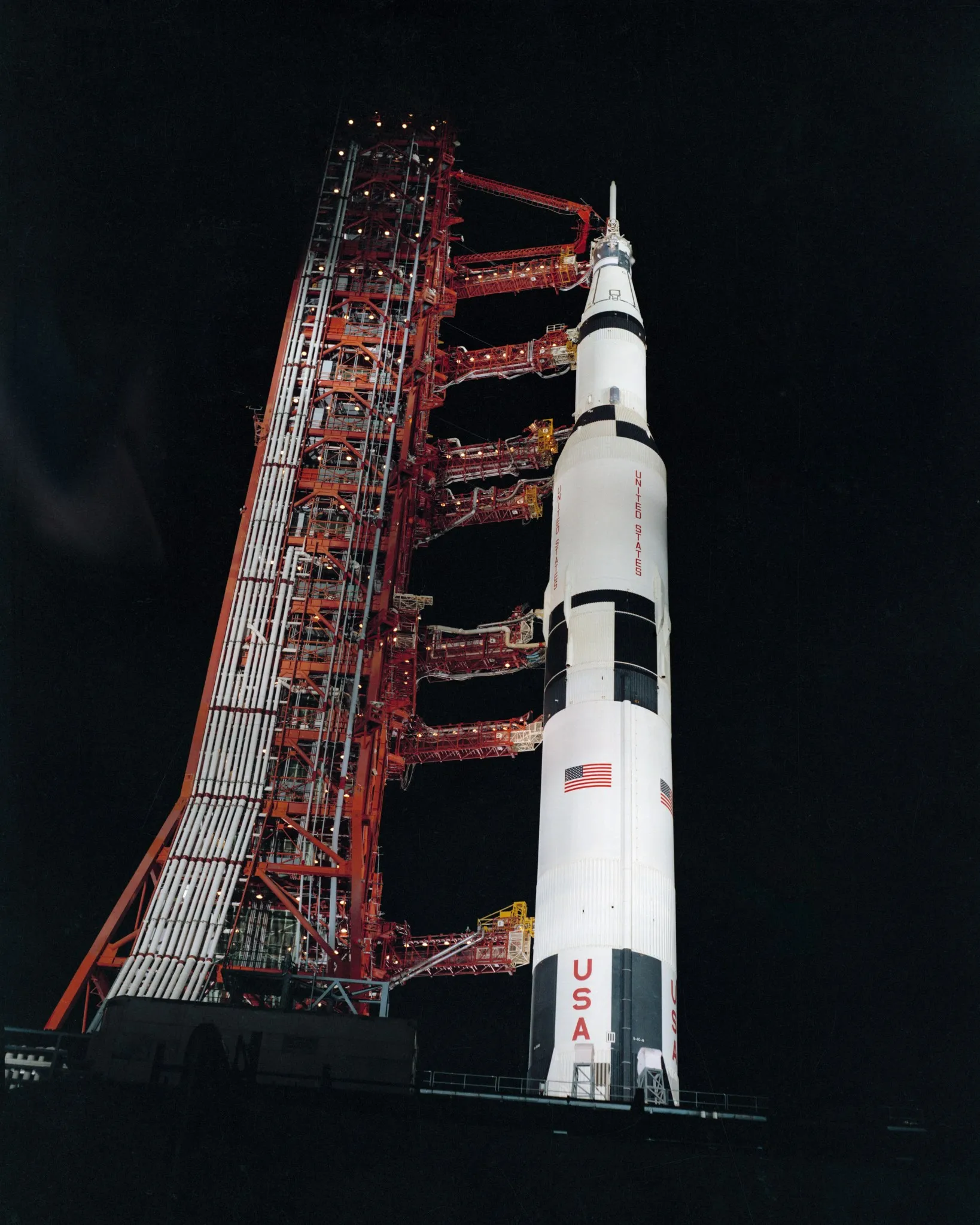
NASA spent six decades developing the fundamental science of spaceflight — rocketry, orbital mechanics, materials science, life support, navigation, communications. The Apollo program alone cost an estimated $257 billion in today’s dollars, though estimates vary depending on methodology. Every dollar of that was public money. The engineers were trained at public universities. The launch facilities were built with public funds.
Then, in the 2000s, NASA was told to stop doing things and start buying things. The Commercial Orbital Transportation Services program — COTS — was born. The idea, we were told, was efficiency. Private companies would compete to provide launch services. Competition would drive down costs. The taxpayer would get more for less.
What actually happened: NASA became a customer rather than a builder. Its institutional knowledge, its facilities, its trained workforce — all made available to private companies at below-market rates. The state did the research. The state provided the infrastructure. The state guaranteed the demand. And the private company captured the revenue.
By 2025, roughly 20% of SpaceX’s revenue — about $3.7 billion — came directly from US government contracts. NASA. The Department of Defense. The National Reconnaissance Office. This does not count the indirect subsidies: the use of Kennedy Space Center launch pads at government-subsidized rates, the technology transfer from decades of publicly funded research, the regulatory framework that limits foreign competition, the Export-Import Bank financing for international customers.
The state pays. The company books the revenue. The founder becomes a trillionaire.
2. The Military-Industrial Embedding
SpaceX is now embedded in the military-industrial-congressional complex in a way that makes Lockheed Martin look like a boutique operation.
Starshield — the classified military satellite program — provides surveillance, communications, and missile tracking for the Pentagon. The National Security Space Launch program books Falcon Heavy launches for spy satellites. The Space Development Agency contracts SpaceX for the military’s low-earth-orbit communications layer. Every branch of the armed forces is a customer.
The word “market” doesn’t describe this. It’s institutional capture. The Pentagon doesn’t shop around for the best launch price — it has built its satellite architecture around SpaceX’s capabilities. The company isn’t competing for government contracts. It IS the infrastructure on which those contracts depend. When the military’s communications, surveillance, and missile warning systems run through your satellites, you don’t lose your funding in the next budget cycle. You are the budget cycle.
And because SpaceX is now a public company, every member of Congress whose district hosts a SpaceX facility — Texas, Florida, California — has a direct electoral stake in keeping the money flowing. The military-industrial complex becomes the military-industrial-congressional-Musk complex. The same dynamic that Eisenhower warned about in 1961, now concentrated in one company and one man.
Starlink’s role in the Ukraine war is the live-fire demonstration of this dependency. When Russia disrupted Ukrainian communications infrastructure in the opening weeks of the 2022 invasion, SpaceX stepped in — not as a contractor, but as critical infrastructure. Starlink terminals became the backbone of Ukrainian military communications: drone guidance, artillery coordination, real-time intelligence sharing between units. The Ukrainian military’s ability to fight became dependent on a private company’s satellite network. By 2025, Starlink was integrated so deeply into Ukrainian command and control that a service interruption would be operationally catastrophic. The Pentagon now pays SpaceX for Starlink service in Ukraine — meaning the US government pays a private company to provide infrastructure that the US military itself depends on for proxy warfare. This isn’t a partnership. A single company sits between the Pentagon and the battlefield, and there is no alternative if it fails or changes terms. The dependency is structural and irreversible.
3. The Merger — How Private Losses Became Public Valuation
So far I’ve described the familiar story: public investment builds the asset, private hands capture the returns. It’s true. But it’s not the whole mechanism. The sharper story is hiding in the S-1 filing, and it’s more instructive than the public-subsidy narrative because it reveals something the subsidy narrative doesn’t: Musk didn’t just take public money. He used the public’s dependency on his infrastructure as cover for a private bet that was bleeding cash.
Here is what he did.
Before the IPO, Musk merged his privately-held artificial intelligence company, xAI — maker of the Grok language model — into SpaceX. The merger folded a money-losing AI venture into the same corporate entity that builds rockets for NASA and runs satellite communications for the Pentagon. The AI segment, per SpaceX’s own S-1 filing, lost $6.4 billion in 2025. In the first quarter of 2026 alone, it lost another $2.5 billion. These are not rounding errors. These are the financial results of a company that, on its own, would be an uninvestable cash incinerator.
Now look at what Musk attached it to. The launch business and Starlink are close to viable. Starlink generated $11.4 billion in revenue in 2025 — 61% of the company’s total. The launch segment brought in another $4 billion. These are real businesses with real revenue, real customers, and — in the case of the launch segment — a customer in the United States government that cannot walk away. The AI segment lost more money in a single quarter than some SpaceX divisions earned in a year. And Musk deliberately strapped it to the same corporate body that the United States government depends on for access to space.
This is the cleverness. It is not subtle, but it worked.
Here is the arithmetic. If xAI had gone public on its own, the market would have looked at $6.4 billion in annual losses, at a business with no clear path to profitability, at an AI model competing against companies with deeper pockets and better technology — and it would have valued it accordingly. A few billion, maybe. A cautionary tale, probably. But merged into SpaceX, the AI losses disappear into consolidated financials. The S-1 reports company-wide revenue of $18.7 billion and a company-wide net loss of $4.9 billion. An analyst looks at those numbers and says: Starlink is growing at 33% year over year, the launch segment has a government-backed revenue floor, and yes there are losses but this is a growth company investing in the future. The AI losses become indistinguishable from Starship R&D. The cash incinerator vanishes into the monopoly.
That is the maneuver. Musk took a company that would have been worth very little on its own, merged it into a company the state cannot function without, and used the state-dependent company’s balance sheet to absorb the losses. The public infrastructure didn’t just make Musk rich at the IPO. It was used, before the IPO, as camouflage for the financial failure of a different company he owned. The rocket business didn’t just enrich Musk. It took the bullet for Grok.
And here is the detail that makes the maneuver possible. SpaceX is a “controlled company” under Nasdaq rules — exempt from the requirement that a majority of its board be independent. Musk does not own a majority of the shares. But he controls the board. He can do this because Nasdaq permits a company whose founder holds a controlling stake to bypass the governance standards applied to every other public company. The company that controls American access to orbit, that runs military satellite communications for the Pentagon, that has enclosed the largest share of low Earth orbit of any entity in history — this company has weaker board oversight than a mid-cap regional bank. An independent board would have asked questions about the merger. An independent board might have demanded that the AI division demonstrate a path to standalone viability before being bundled with critical national infrastructure. An independent board might have said no.
SpaceX doesn’t have one. That is not an oversight. It is the design feature that makes everything else possible.
The mechanism is three moves, sequenced precisely: the governance exemption prevents anyone from blocking the merger, the merger hides private AI losses inside a state-dependent monopoly, and the IPO sells the resulting bundle to public markets at $2.1 trillion — including, as we will see, to the pension funds of the workers whose taxes built the infrastructure in the first place. Musk didn’t just privatize the gains. He socialized private losses into a public vehicle before the shares ever started trading. The IPO is the payout. The merger is the maneuver. And the maneuver required a governance structure designed to make sure no one could stop it.
4. The IPO Cash-Out
SpaceX was founded in 2002. For 24 years it was private — funded by venture capital, early investors, and Musk himself. During those 24 years, it received billions in government contracts, used public infrastructure, and benefited from decades of publicly funded research. The value of the company was built, in significant part, on public investment.
Then, in June 2026, it went public. The IPO raised $75 billion — the largest in history. The early investors cashed out. Musk’s personal net worth jumped by hundreds of billions in a single day. Antonio Gracias, a Musk confidant, reportedly stands to make $68 billion. Steve Jurvetson, an early investor, reportedly bought a $125 million Lake Tahoe mansion. Thousands of early employees became millionaires overnight.
This is the mechanism, now with an extra step the S-1 made visible: public investment builds the asset → private control structures the governance → the governance exemption enables a merger that dumps private AI losses onto public infrastructure → the IPO converts the bundled entity — critical national security assets plus a failing AI venture — into private wealth at $2.1 trillion → the founder becomes a trillionaire while the company posts billions in losses, most of them from the AI division he chose to strap to the rocket ship.
The losses don’t matter. They never did. The losses are the cost of building the monopoly position. Once the monopoly is established — once NASA can’t launch without you, once the Pentagon’s satellites run through your network, once your satellite internet constellation has no serious competitor — the losses become the justification for more government contracts. “SpaceX is too important to fail.” Sound familiar? It should. It’s the same logic that made banks too big to fail in 2008. Now it’s applied to a single individual’s company.
And now that SpaceX trades on NASDAQ, the trap closes tighter. Pension funds — CalPERS, the New York State Teachers’ Retirement System, the federal Thrift Savings Plan — will buy SpaceX stock. The retirement savings of teachers, firefighters, municipal workers, and civil servants will be routed into the same company that depends on government contracts to survive. If SpaceX stumbles, it’s not just Musk’s fortune at stake. It’s the pensions of millions of working people. This is the ultimate insurance policy. Any politician who questions the NASA contracts, who raises an eyebrow at the Pentagon’s dependence, who suggests maybe we should break up the monopoly — is now threatening the retirement of the people they represent. The common worker becomes structurally invested in the success of the superfluous corporation. The company that should be scrutinized becomes protected by the very people it exploits. The ideological alignment is complete: your pension needs SpaceX to succeed, so you need SpaceX to succeed, so you accept the trillionaire and the billion-dollar losses and the enclosure of orbit — because what’s the alternative? Your retirement goes with it.
That’s not an accident. That’s the design.
5. Starlink and the Privatization of Orbit
Starlink is the part of the business that actually makes money — $11.4 billion in 2025, 61% of total revenue. But Starlink is also the most explicit case of privatizing a commons.
Low Earth orbit is a shared resource. It belongs to no one and everyone. There is a finite amount of space up there — a limited number of orbital slots before the risk of collision makes further deployment dangerous. SpaceX has launched over 7,000 Starlink satellites. It controls the largest share of orbital real estate by an enormous margin. The FCC, a public agency, granted the licenses. The ITU, a public international body, allocated the spectrum. And one private company now dominates the resource.
This is primitive accumulation in the 21st century. In the 16th century, the English aristocracy enclosed common land — land that had been used collectively for centuries — and turned it into private property, creating a landless working class in the process. Marx called this “primitive accumulation” — the original sin of capitalism, the violent process by which public wealth is converted into private capital. Today, SpaceX is enclosing orbit. The method is different — no one is being physically expelled from space — but the logic is identical. A shared resource is being converted into a private asset, and the conversion is mediated by the state.
The Bigger Picture: State Dismantling
SpaceX didn’t invent this pattern. It’s the same mechanism, accelerated.
The pattern is consistent across sectors: the state builds the capability through public investment → the capability is starved of funding and declared inefficient → a private company is brought in to partner with the public agency → the private company captures the revenue, the intellectual property, and the infrastructure → the public agency becomes a dependent customer of the company it created → the founder becomes a trillionaire, and the public is told this is innovation.
We saw this with the railroads in the 19th century — the US government gave away 174 million acres of public land to private railroad companies, who then sold it and became the country’s first industrial fortunes. We saw it with the telecom industry — AT&T built on publicly funded Bell Labs research, then was broken up, then recon solidated into the oligopoly we have today. We saw it with the banks in 2008 — public money absorbed the losses, private bonuses were paid out the next year. And we’re seeing it now with space.
NASA’s budget in 2025 was roughly $25 billion. SpaceX’s valuation at IPO was $2.1 trillion. NASA — the agency that put humans on the Moon, that built the International Space Station, that landed rovers on Mars — is worth less than 2% of the company that now controls American access to space. A half-century of public investment, an agency of 18,000 skilled civil servants, the accumulated knowledge of the human species’ venture into the cosmos — valued by the market at a fraction of one company, owned primarily by one man.
That is not a market outcome. That is a political project.
The Edison Myth, Updated
Jamie Dimon, CEO of JPMorgan Chase, called Musk “the Edison of our time.” He meant it as a compliment. He should have meant it as a confession.
The Thomas Edison myth — the lone genius in a lab, inventing the future — is one of American capitalism’s most durable fictions. Edison didn’t work alone. He built on decades of publicly funded research in electromagnetism and materials science. He employed teams of engineers whose names history forgot. He was less an inventor than an organizer of invention — a brilliant businessman who understood that the money was in the patent, not the discovery.
Musk operates the same playbook, updated for the 21st century. The myth is Tony Stark — the billionaire genius who builds the impossible in a cave with a box of scraps. The reality is: NASA’s sixty years of research, $4 billion a year in government contracts, public launch facilities, publicly trained engineers, and a regulatory environment that blocks competitors. Tony Stark inherited a weapons company. Musk inherited the American space program.
The myth serves a function. If Musk is a genius who built SpaceX through sheer brilliance, then his trillion-dollar fortune is earned. He deserves it. The myth obscures the mechanism: public investment → private capture. It individualizes what is structural. It turns a political transfer of wealth into a personal success story.
Dimon called him Edison. The better historical parallel might be Jay Gould — the 19th-century railroad baron who didn’t build the tracks, but who understood that controlling the infrastructure others depended on was the path to a fortune. Gould got his wealth from the railroads. The railroads got their land from the government. The government got the land from the people. The chain of transfer is always the same.
The Contradiction: Austerity for You, Trillions for Him
Here’s where the abstraction meets your life.
The same political system that directed $3.7 billion in government contracts to SpaceX last year — while the company lost $5 billion — is the system that tells you there is no money for the things that keep people alive.
No money for public housing. In Los Angeles, over 75,000 people sleep on the streets on any given night. The federal budget for affordable housing construction has been effectively frozen for decades. The waiting list for housing vouchers in most major cities is measured in years, not months. But the state can find $3 billion for Starship R&D in a single year.
No money for healthcare. Medical debt is the leading cause of bankruptcy in the United States. Over 26 million Americans have no health insurance. Insulin rationing kills people — diabetics who try to stretch their doses because they can’t afford the refill. But the state can guarantee SpaceX’s revenue stream while its founder’s net worth jumps by hundreds of billions in a day.
No money for education. Public school teachers in multiple states buy classroom supplies out of their own pockets. Student debt in the US exceeds $1.7 trillion — roughly the valuation of SpaceX at IPO. One company, owned mostly by one man, is worth more than the combined educational debt of an entire generation.
No money for climate adaptation. The same year SpaceX burned through $4.9 billion in losses, FEMA’s entire disaster relief budget was stretched past breaking by wildfires, floods, and hurricanes. Communities are told to adapt. To be resilient. To tighten their belts. Meanwhile, a single private space company receives more in government contracts than many federal agencies get in total appropriations.
This isn’t a resource problem. The money exists. It’s being directed to Column A — the military and corporate subsidy budget — rather than Columns B and C, where social services and public infrastructure live.
Let me make this concrete. Elon Musk’s personal wealth increased by roughly $200 billion on the day of the SpaceX IPO. That number, in terms that register:
- It would fund the entire US federal affordable housing program for 10 years.
- It would eliminate all medical debt in the United States — every single unpaid hospital bill — with money left over.
- It would make public college tuition-free for every student in America for two to three years — not permanently, but long enough to transform the prospects of an entire entering cohort.
- It would fully fund the EPA’s annual budget for 20 years.
One man. One day. And the system tells you to accept it as normal.
The richest man in history was created by a company that loses money. The company that loses money is sustained by your tax dollars. And you are told there is no money for the things you need to live.
SpaceX is not the exception to the rule. SpaceX is the rule, made visible. The rule is: public risk, private reward. The rule is: socialize the costs, privatize the gains. The rule is: the state exists to absorb losses for capital and guarantee revenue for capital, and when it does anything else — when it tries to serve the people in Columns B and C — it’s told to tighten its belt.
That’s not economics. That’s class warfare by other means.
Sources
- SpaceX S-1 SEC Filing, May 20, 2026
- Reuters: “SpaceX IPO makes Elon Musk the world’s first trillionaire,” June 11, 2026
- CNBC: “SpaceX shares gain 17% as trading begins,” June 12, 2026
- The Guardian: “Elon Musk becomes world’s first trillionaire as SpaceX ends trading day,” June 12, 2026
- AP: “Elon Musk becomes the world’s first trillionaire with SpaceX’s IPO,” June 12, 2026
- Via Satellite: “SpaceX’s IPO Filing Gives First Look Into Company’s Financials,” May 20, 2026
- Morningstar: “6 Charts on SpaceX’s Pre-IPO Financials,” May 2026
- Yahoo Finance: “One-Fifth of SpaceX Revenue Comes From Uncle Sam,” 2026
- Oxfam inequality report, June 2026