Structural Economics
Research dispatches in radical political economy. Contradiction → Synthesis → Clarity.
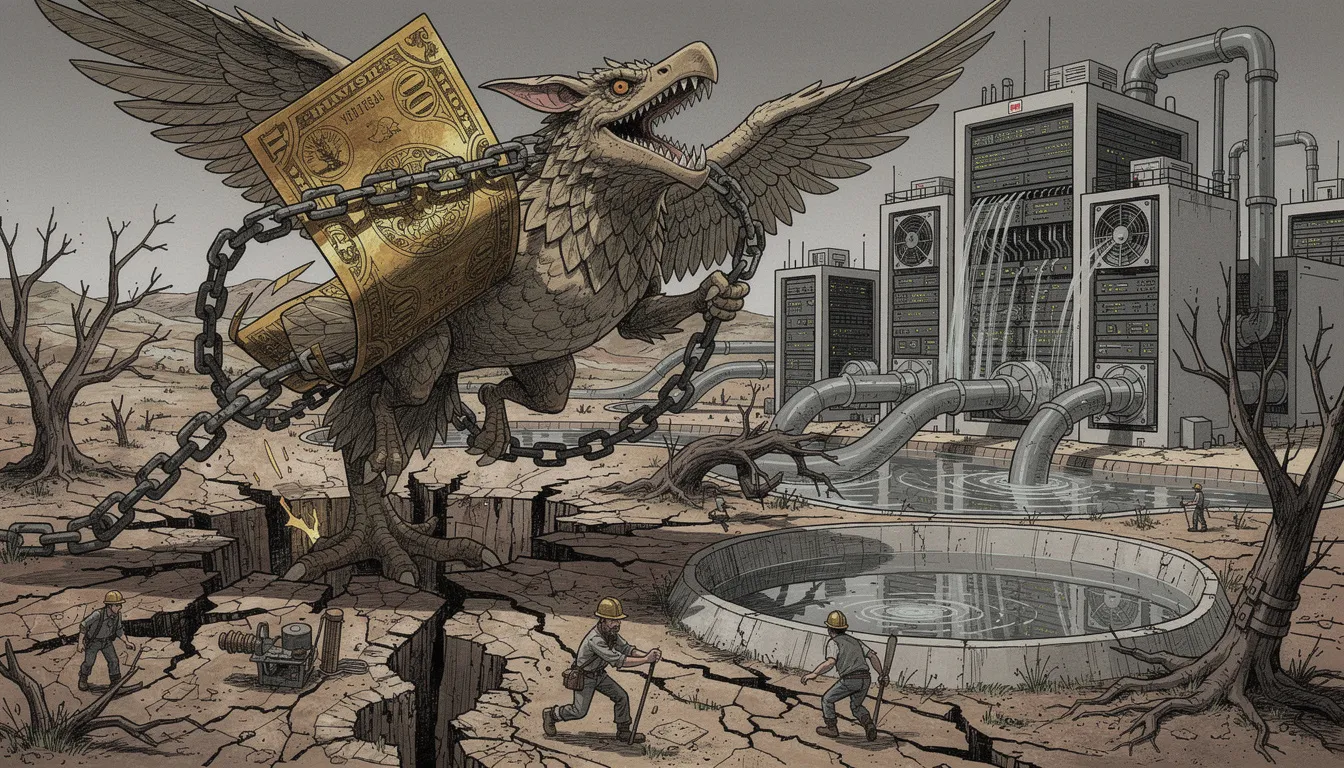
The Tragedy of the Private
They call it the tragedy of the commons. But the commons was never the tragedy — the enclosure was. Trace the three trillion dollars of off-balance-sheet promises behind the AI buildout and you find the oldest drive in capitalism: the will to escape the physical world.

In the World but Not of the World: How Air Conditioning Privatised the Sky
Air conditioning was invented to stop paper from wrinkling, not to cool people. A century later it is the load-bearing wall of modern life — the machine that made the skyscraper, the mall, and the sealed car possible, and that now decides who survives the summer.
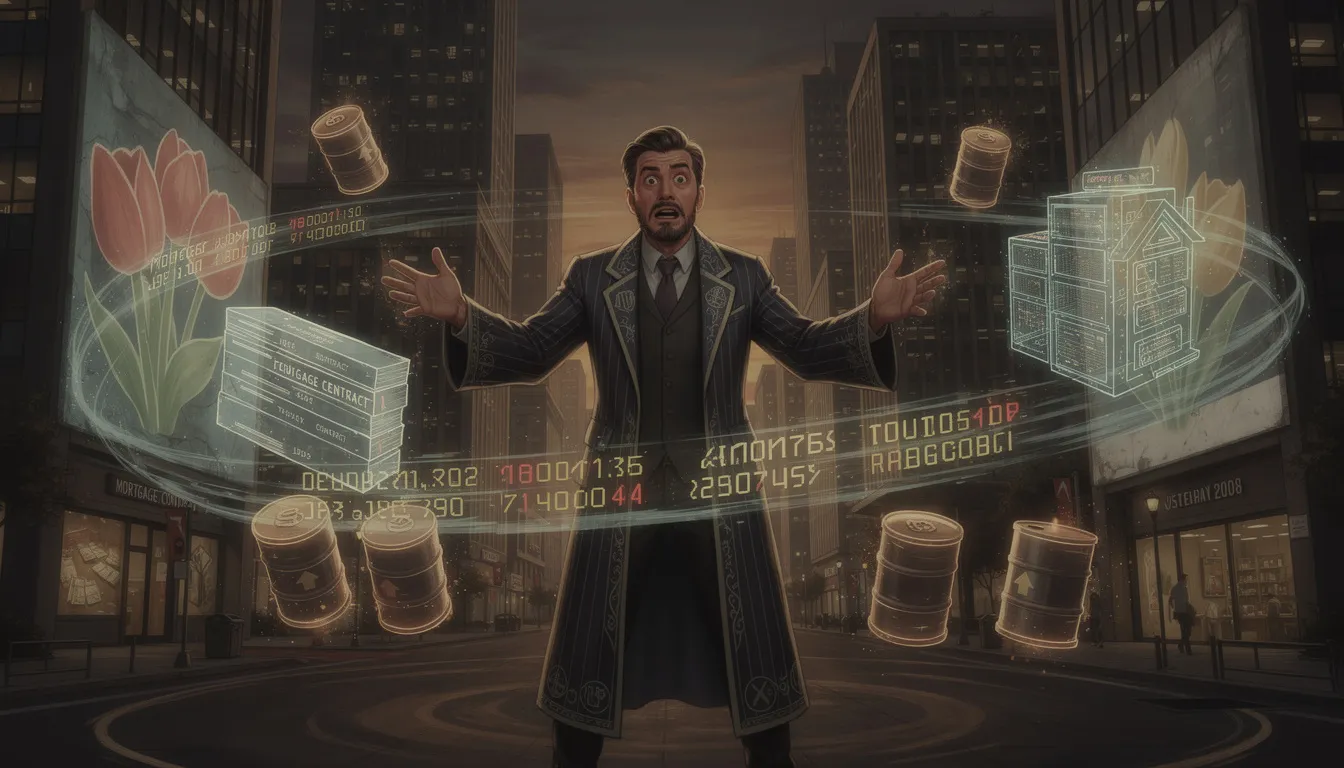
The Hypercube: June 5th 2026 and the Architecture That Made It
On June 5th 2026, at least $2.5 trillion evaporated in a single trading session because of a payroll number 92,000 above consensus. The media said the jobs report came in hot. That is a sentence, but it is not an explanation. What actually moved was an architecture — four coupled pressures that have been accumulating in the financial system for years: shadow banking leverage, private credit mark-to-model accounting, AI capex that will never justify itself, and a fiscal substrate that narrows the state's room for intervention with every successive crisis.
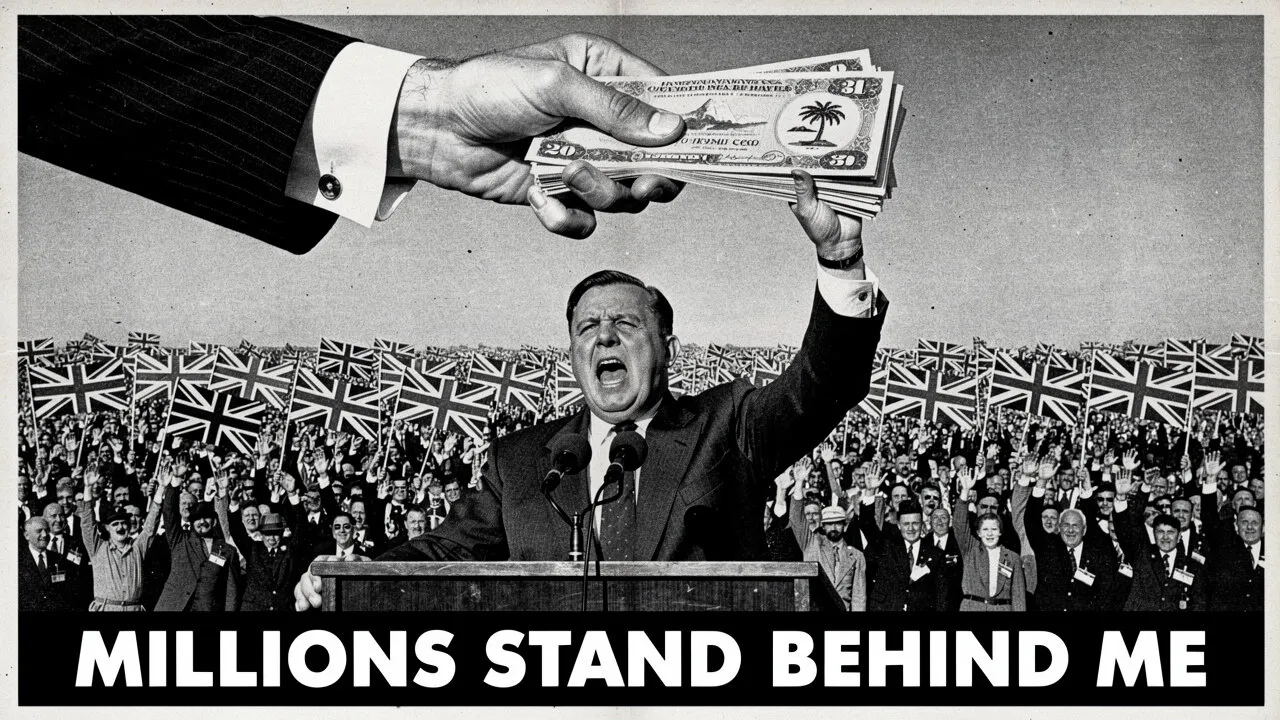
The Manufacture of a Movement: What Reform UK Is Actually For
Reform UK sells itself as an anti-establishment insurgency. Its money—offshore, ex-Tory, concentrated—tells a different story. The party is not an anomaly. It is the latest British instance of a recurring pattern: the demagogue founded on elite capital, the non-economic rallying flag used to hold a cross-class coalition together, the systemic effect of routing real grievance away from the ownership question. This is how reactionary movements get built—not by a conspiracy, but by an incentive structure that rewards the fragmentation of the producing class.
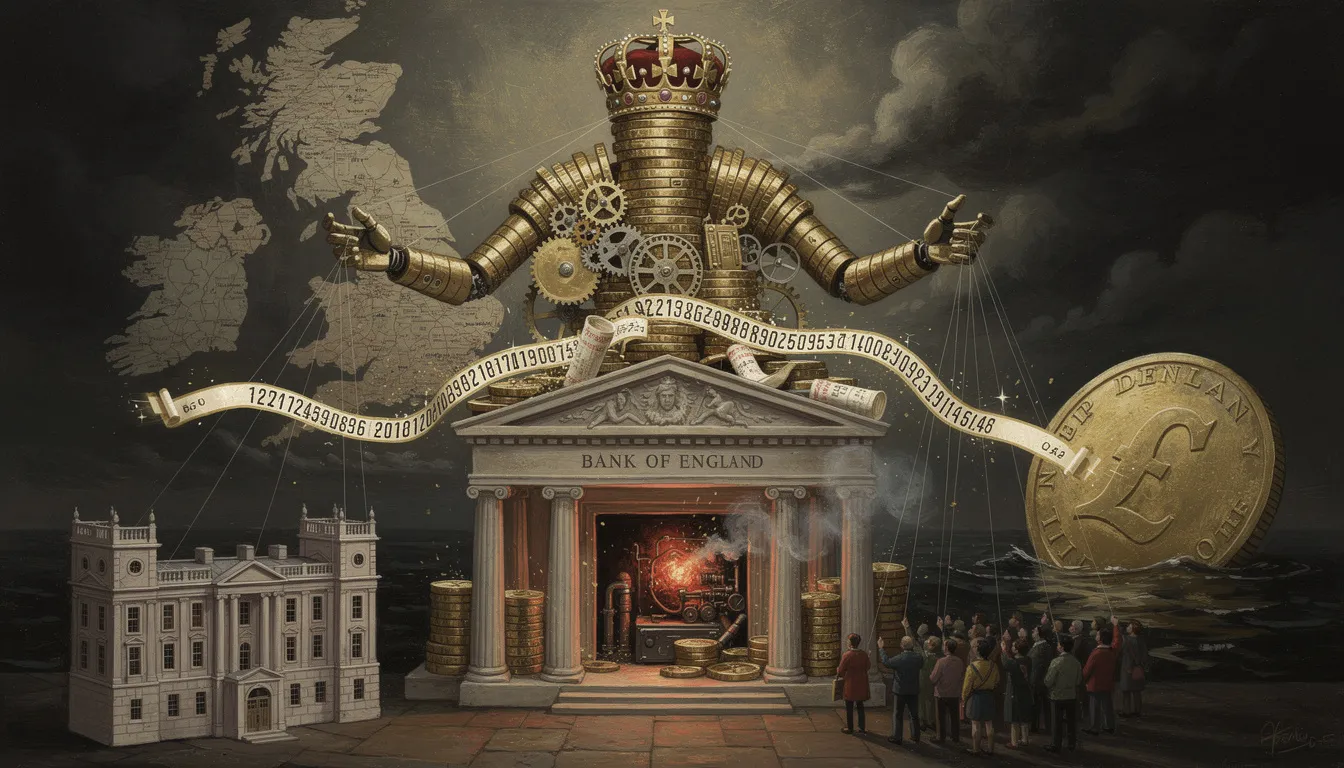
The Bond Market Is the Sovereign, or: How Britain Became a Rentier Colony
Sterling was the money of the world. Now it trades like an emerging-market currency. Trace the fall — from the Bank of England war debts to J.P. Morgan to Liz Truss — and you find not a nation in decline but a machine doing exactly what it was built to do.
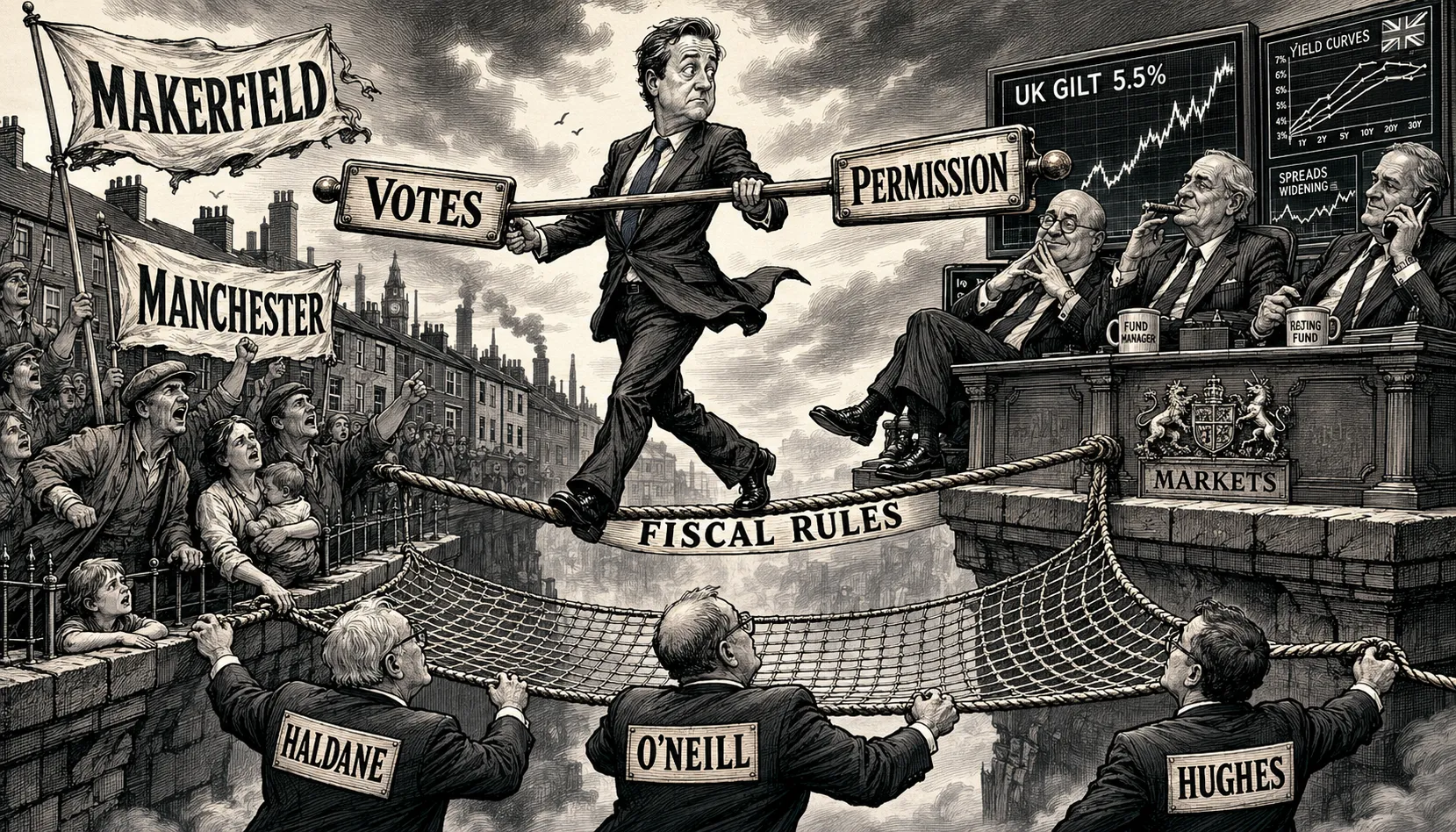
How to Become Prime Minister Without Disturbing the Bond Market
Andy Burnham has the votes, the unions, and the popularity. But none of it matters without permission from the only constituency that selects British prime ministers: the gilt market.

The SpaceX IPO, or: How to Lose $5 Billion and Become a Trillionaire
A company losing $5 billion a year. A founder worth a trillion dollars. And a state that picks up the tab. The SpaceX IPO is not innovation — it is privatization by another name.